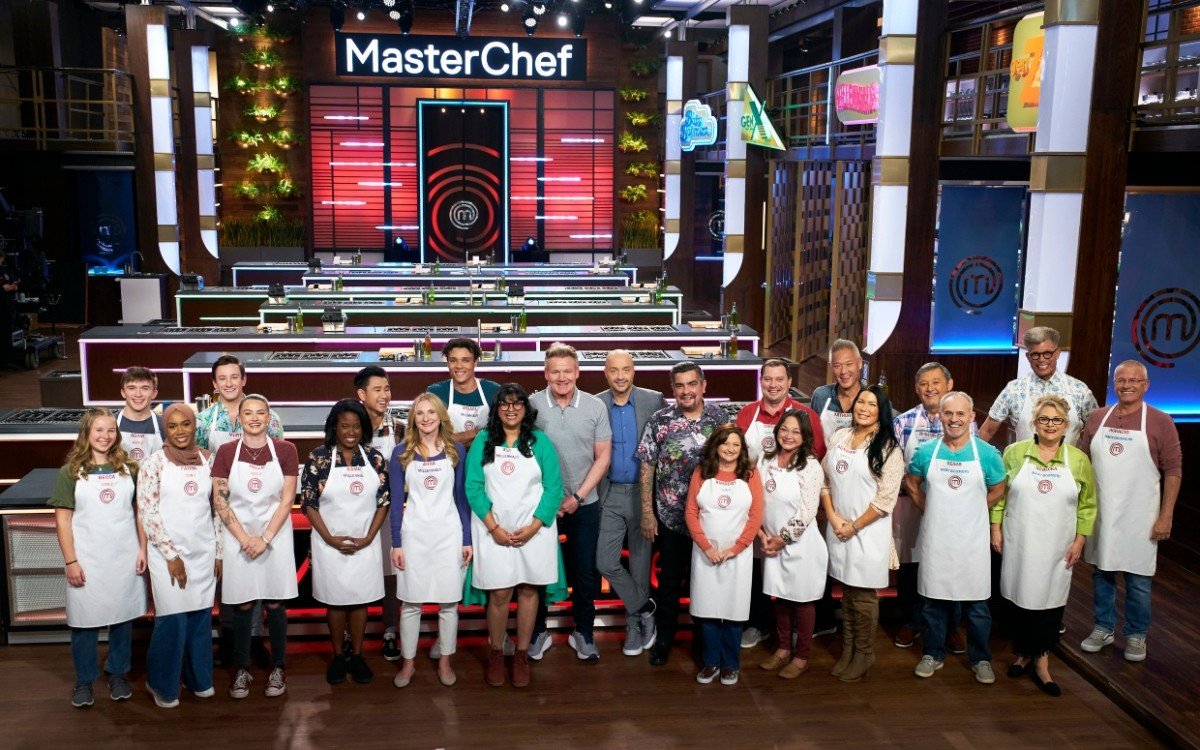
The sizzling sound of a perfectly seared scallop, the pressure of a ticking clock, the piercing gaze of Gordon Ramsay – these are the hallmarks of MasterChef. But for its latest iteration, MasterChef Generations, the iconic culinary competition adds a new layer of flavor, igniting a kitchen battle where the age-old question isn't just "Who can cook?" but "Which generation cooks best?" This comprehensive guide delves into the MasterChef Generations Show Formats & Overview, exploring how this unique premise sets the stage for a compelling, cross-generational showdown.
Forget your typical home cook competition. This season, MasterChef isn't just looking for the best individual chef; it's orchestrating a clash of culinary philosophies, traditions, and innovative approaches, all shaped by the eras in which these cooks grew up.
At a Glance: MasterChef Generations
- The Judges: Culinary titans Gordon Ramsay, Aarón Sánchez, and Joe Bastianich return to preside over the MasterChef kitchen.
- The Competitors: Top home cooks are divided into four distinct generational groups: Baby Boomers, Generation X, Millennials, and Generation Z.
- The Premise: Explore how cooking styles, techniques, and food preferences differ across generations.
- The Goal: To crown one individual the MasterChef champion, proving that culinary brilliance transcends age.
- The Stakes: Bragging rights for an entire generation, plus the coveted MasterChef trophy and prize.
The Ultimate Question: Which Generation Rules the Kitchen?
"There’s nothing more timeless than cooking," muses Gordon Ramsay, acknowledging a universal truth. "Everyone’s done it: your parents, your grandparents—even your kids. But, one thing’s for sure: How people cook across generations is very different." This observation forms the very bedrock of MasterChef Generations. The show explicitly challenges contestants to bring their generational cooking identity to the forefront, creating a fascinating dynamic where personal skill is inextricably linked to collective heritage.
This isn't just a gimmick; it's a profound exploration of how cultural shifts, technological advancements, and evolving lifestyles have impacted the way we approach food. From traditional family recipes passed down through generations to groundbreaking techniques learned online, every dish tells a story – and this season, those stories are steeped in generational context.
Meet the Culinary Arbiters: Ramsay, Sánchez, and Bastianich
Returning to their familiar posts, the formidable trio of Gordon Ramsay, Aarón Sánchez, and Joe Bastianich are back to critique, inspire, and, at times, intimidate the home cooks. Each judge brings a unique perspective, but their collective expertise ensures that every plate is assessed on its merits of flavor, technique, and presentation.
Their shared experience, spanning decades in the culinary world, makes them uniquely positioned to appreciate the diverse approaches presented by the four generations. They've witnessed the storied history of MasterChef evolve, and now they'll directly observe the evolution of home cooking itself. Expect Gordon Ramsay's signature judging style to be as sharp as ever, Sánchez's palate discerning, and Bastianich's business acumen keen on consistency and potential. Their individual insights into the generational characteristics, as shared in promotional materials, hint at how they might lean or interpret dishes from various age groups.
Decoding the Generational Battlefield: Who's Cooking What?
The genius of MasterChef Generations lies in its casting – not just talented cooks, but talented cooks embodying distinct generational traits. The show's narrative is built upon the judges' own playful, yet insightful, "assessments" of what each generation brings to the stove.
The Wise & Flavorful: Baby Boomers (Born 1946-1964)
Introduced by Ramsay as "the kings and queens of flavor who are incredibly wise," the Baby Boomers step into the kitchen armed with a rich culinary history. Their cooking is often synonymous with "traditional cuisine and old-world family recipes." Imagine hearty roasts, comforting casseroles, time-honored baking techniques, and flavors perfected over decades.
What to expect: Boomers are likely to prioritize deep, developed flavors, classic preparations, and the art of slow cooking. They might be less focused on flashy plating but will deliver dishes that evoke nostalgia and comfort, relying on tried-and-true methods rather than trendy shortcuts. Their wisdom might also translate into resilience under pressure and an intuitive understanding of ingredients.
Resourceful & Independent: Generation X (Born 1965-1980)
Joe Bastianich, himself a Gen Xer, describes his generation in a nostalgic, VHS-style flash: "The latchkey kids who grew up in the ‘70s and ‘80s who were raised on mall food courts and music videos." Ramsay further praises them as "resourceful and incredibly independent." This blend suggests a pragmatic, adaptable approach to cooking.
What to expect: Gen X cooks might be the bridge generation, comfortable with both traditional techniques and a willingness to experiment. Their independence could mean bold choices, and their resourcefulness, a knack for transforming everyday ingredients into something special. They might fuse familiar flavors with unexpected twists, reflecting a generation that came of age before the internet boom but embraced evolving culture. Perhaps they'll present dishes that are familiar but elevated, showcasing clever problem-solving in the kitchen.
Passionate & Media-Savvy: Millennials (Born 1981-1996)
Aarón Sánchez introduces Millennials as "the passionate, media-savvy millennials? These guys grew up on the worldwide web blogging their inner thoughts and creating hot food trends. No avocado toast is complete without Salsa Macha." Joe Bastianich adds that they grew up during the peak of food television, suggesting "they may have even learned techniques from MasterChef" itself.
What to expect: Millennials are likely to bring a strong emphasis on global flavors, dietary awareness, and, crucially, stunning presentation. Their online exposure means they're quick to adopt and adapt evolving culinary trends, from fermentation to sous-vide, and are acutely aware of how a dish "looks" on camera. Expect visually appealing plates, innovative ingredient combinations, and a confident, articulate approach to their culinary choices. They might also be more comfortable taking risks with international cuisines.
Ambitious & Boundary-Pushing: Generation Z (Born 1997-2012)
Gordon Ramsay highlights Gen Z as "ambitious," "boundary-pushing," and "adventurous," noting they "do everything on their phone." He quips, "[they are] most of my followers on Tik-Tok," implying a generation that learns and shares recipes instantly through digital platforms like TikTok and YouTube.
What to expect: Gen Z contestants are the wild cards. Their exposure to a truly global culinary landscape from a young age, coupled with an adventurous spirit, means highly creative, often fusion-inspired dishes. They might challenge conventional wisdom, utilize cutting-edge techniques, and prioritize sustainability or plant-based options. Their "phone-first" learning style could lead to surprising innovation, but perhaps also an occasional lack of foundational technique compared to those with more traditional training. They are likely fearless in their experimentation.
How the "Generations" Format Elevates the Game
The generational framework isn't just for show; it's intricately woven into the fabric of the competition, creating unique challenges and narratives.
- Diverse Skill Sets Tested: Challenges will likely be designed to push each generation out of its comfort zone. A classic French mother sauce might challenge Gen Z, while a viral TikTok trend could stump a Boomer. This ensures that only the most adaptable and well-rounded cooks advance. The show will pit different culinary philosophies against each other in fascinating ways, requiring contestants to either lean into their generational strengths or overcome their potential blind spots.
- Intergenerational Rivalry and Learning: Beyond the individual competition, there's a fascinating dynamic of intergenerational rivalry. Who will prove their era's culinary superiority? But also, expect moments of cross-generational learning and appreciation, where a younger chef might be inspired by a traditional technique, or an older chef wowed by a modern plating style.
- Themed Challenges: Imagine challenges specifically tailored to each generation's perceived strengths or weaknesses. A "vintage comfort food" challenge could favor Boomers, while a "social media-ready dessert" might empower Millennials and Gen Z. This allows for rich thematic storytelling within each episode, moving beyond typical MasterChef competition challenges to explore cultural cooking touchstones.
- Broadened Appeal: By highlighting distinct generations, the show taps into a wider audience. Viewers can cheer for "their" generation, sparking water cooler conversations about culinary preferences and societal shifts. This makes the show not just a cooking competition but a cultural event.
The Judging Lens: Tradition vs. Innovation
The judges' role becomes even more nuanced in MasterChef Generations. How do they fairly evaluate a Boomer's perfectly executed coq au vin against a Gen Z's innovative deconstructed vegan sushi?
- Balancing Act: Ramsay, Sánchez, and Bastianich must balance their appreciation for traditional skills with an openness to modern innovation. They'll be looking for excellence within each dish's chosen style, rather than forcing a single culinary mold.
- Personal Biases and Insights: Joe Bastianich and Gordon Ramsay are both Gen Xers. Will this give them a particular insight or a subtle bias when judging their own generation? Or will it make them even tougher, demanding perfection from their peers? Aarón Sánchez, also Gen X, offers a strong voice that may bridge gaps, focusing on fundamental flavor and execution regardless of generational influence.
- Flavor Remains King: Ultimately, MasterChef has always been about flavor. While presentation and technique are crucial, a dish that doesn't taste good, regardless of its generational origin, will not impress. The judges' palates are too refined to be swayed by novelty alone; true skill and understanding of ingredients will always shine through.
Beyond the Kitchen: Cultural Commentary and Viewer Engagement
MasterChef Generations offers more than just culinary entertainment; it serves as a fascinating piece of cultural commentary. It reflects the evolution of home cooking and societal norms through the universal language of food.
The show prompts viewers to consider:
- How has your own cooking style been influenced by your generation?
- Do you lean towards traditional recipes or experimental dishes?
- What culinary knowledge have you inherited, and what have you discovered?
This broad appeal creates active engagement. Viewers will undoubtedly find themselves taking sides, debating which generation has the edge, and perhaps even recognizing elements of their own family's cooking journey on screen. It's a journey into culinary history, present trends, and future possibilities, all wrapped in the high-stakes drama of a MasterChef competition.
Frequently Asked: The MasterChef Generations Edition
The unique premise of this season naturally sparks a few common questions.
Q: Is one generation inherently better at cooking?
A: The show's premise is to find out, but the reality is that culinary skill is personal, not generational. Each generation has unique strengths. Boomers might excel at classic techniques and developed flavors, Gen X at resourceful adaptation, Millennials at global trends and presentation, and Gen Z at fearless experimentation and digital-age innovation. The show aims to crown the best cook, regardless of their birth year.
Q: Will the challenges be fair to all generations?
A: Absolutely. MasterChef challenges are typically designed to test a wide range of skills – from basic knife work and pantry identification to complex fine dining creations. For Generations, the producers will undoubtedly craft challenges that allow each generation to shine while also pushing them beyond their comfort zones, requiring adaptability and a willingness to learn new techniques or revisit old ones. Fairness means everyone gets a chance to showcase their best.
Q: What's at stake for the winner?
A: As with all MasterChef seasons, the stakes are incredibly high. The last cook standing will earn the prestigious MasterChef trophy, a substantial cash prize, and the invaluable title of MasterChef champion. This season, however, they'll also carry the informal bragging rights for their entire generation, making the victory even sweeter.
Your Seat at the Table: What to Expect and How to Watch
MasterChef Generations promises a season rich with personality, unexpected culinary triumphs, and perhaps a few generational clashes. It’s a compelling exploration of how our upbringing and the times we live in shape one of life's most fundamental acts: cooking. You'll witness the wisdom of experience battle the audacity of youth, the comfort of tradition meet the excitement of innovation.
Get ready to watch culinary history unfold as home cooks from four distinct eras battle for the ultimate title. You can catch all the action, the drama, and the delicious dishes on HBO Max. Prepare to be inspired, entertained, and perhaps even to reconsider your own generational cooking biases.
Learn more about MasterChef Generations and prepare your palate for a season unlike any other. Which generation will ultimately impress all three judges with their flavor, technique, and presentation to score the big trophy? There's only one way to find out.